

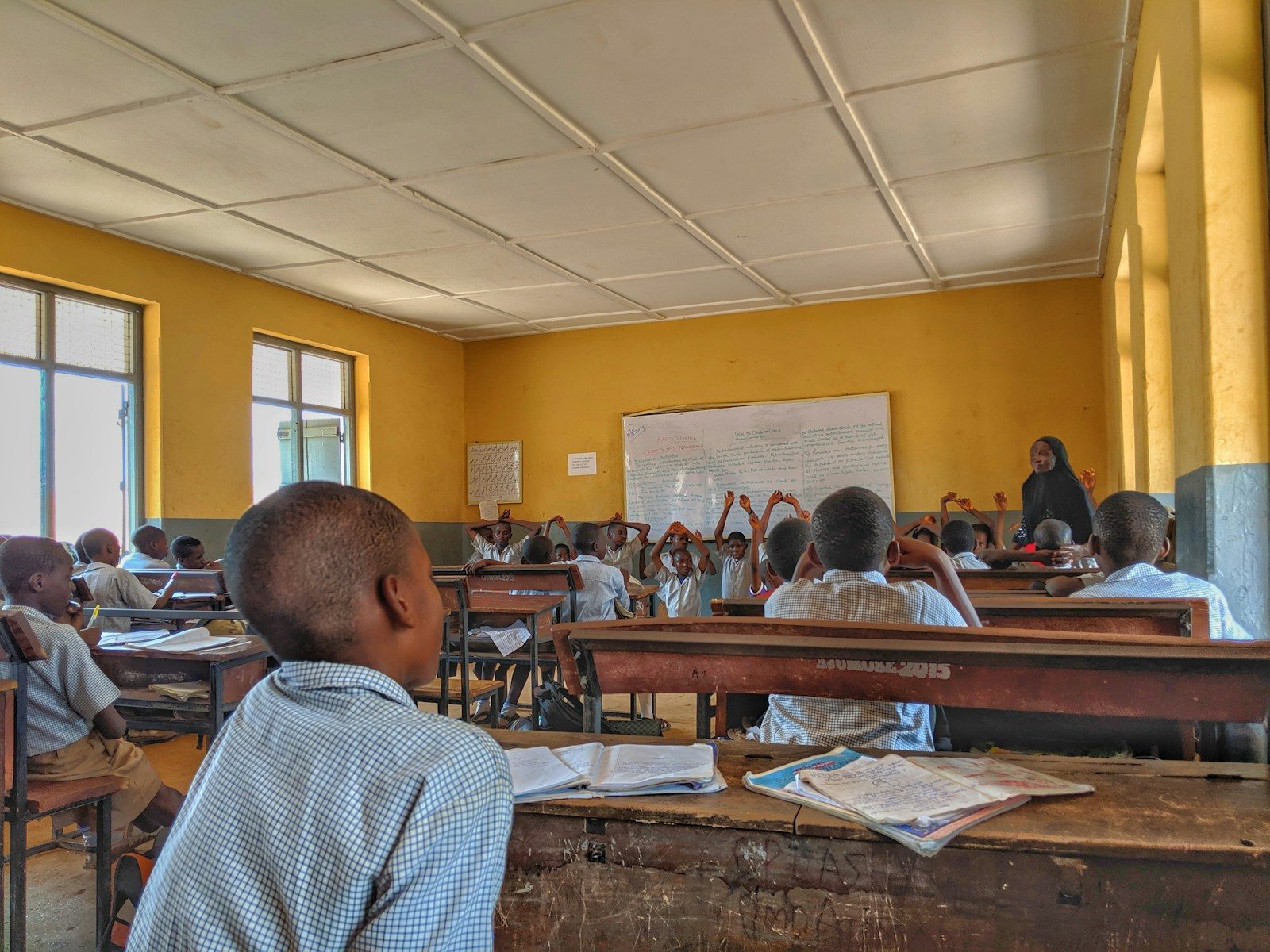
Preparing for 2035: Why Traditional Rote Learning is Failing the Next Generation of African Children
The year 2035 is not a distant, sci-fi horizon—it is a looming reality for today’s primary school classrooms. A child entering the first grade today will graduate into a global economy defined by technologies that are still in their infancy. As artificial intelligence, advanced automation, and predictive data systems integrate into every industry, the definition of human capability is undergoing an unprecedented shift.
Historically, education systems across Africa have relied heavily on traditional rote learning—a methodology built on passive listening, choral repetition, and high-stakes memorization. While this model was designed to produce disciplined workers for bureaucratic structures, it is fundamentally incompatible with the modern digital economy.
In an automated world, raw memorization is obsolete. If a piece of information can be looked up in a fraction of a second, forcing a child to spend years memorizing it without context is a critical waste of human potential.
At ClacachiEduLimited, we believe that preparing African children for the next decade requires an immediate shift in early childhood education. To help the next generation thrive in the face of rapid automation, we must move away from rigid memorization and embrace active, problem-solving educational frameworks.
1. The Looming Workforce Collision of 2035
By 2035, the African continent will house the youngest, largest workforce in the world. At the same time, global economic engines will be driven by cognitive skills that rote learning completely ignores.
[Traditional System] ──► Rote Memorization ──► Replaces Repetitive Tasks ──► Job Displacement
▲
│ (The Skills Gap)
▼
[Modern Industry] ──► Complex Design ──► Automates Data Systems ──► High-Skill Demand
The Inevitability of Automation
Repetitive, rule-based tasks are the easiest to automate. Traditional jobs in bookkeeping, routine data entry, basic administrative support, and standardized manufacturing are disappearing. Because rote education trains children to act like organic storage units, it inadvertently prepares them for positions that machines can perform faster, cheaper, and with fewer errors.
The Rise of the Synthesis Economy
The workforce of 2035 will reward professionals who can analyze large datasets, connect insights across different fields, and design creative solutions to complex, real-world problems. Industry value is shifting away from knowing the answers and toward knowing how to ask the right questions.
2. Why Rote Learning Fails the Cognitive Test
To understand why traditional memorization harms early development, we must look at how it limits a child’s natural cognitive processing.
| Educational Dimension | Traditional Rote Learning | Cognitive Reality & Impact |
| Information Retention | Short-term storage optimized for passing exams; rapidly lost after test completion. | Prevents deep conceptual understanding, leaving students with fragmented knowledge. |
| Critical Thinking | Discourages questioning; treats a single textbook or teacher as the absolute authority. | Stifles curiosity, making it difficult for children to analyze conflicting data. |
| Problem Solving | Focuses on single, predetermined answers to artificial, structured problems. | Leaves students unprepared for fluid, unpredictable workplace challenges. |
| Collaboration | Prioritizes individual quietness and competitive, isolated testing models. | Fails to develop team dynamics, empathy, and collective project execution skills. |
When a child is taught exclusively through repetition, they learn to fear mistakes. In a fast-moving innovation economy, however, making mistakes, running experiments, and iterating on designs are essential parts of the learning and development process.
3. The Solution: Clacachi’s Hands-On STEAM Framework
We cannot solve tomorrow’s economic challenges using yesterday’s teaching tools. To prepare the next generation, early childhood education must integrate STEAM principles: Science, Technology, Engineering, Arts, and Mathematics. This approach shouldn’t be taught as separate, abstract subjects, but as a unified, hands-on framework for exploring the world.
At ClacachiEduLimited, we design real-world, child-centered environments where students learn by doing, building, and exploring.
[Clacachi STEAM Framework]
│
┌────────┴────────┐
▼ ▼
[Active Inquiry] [Physical Design]
(Coding, (Robotics,
Experimenting) Modeling)
│ │
└────────┬────────┘
│
▼
[Adaptive Problem Solving for 2035]
Science as Active Inquiry
Instead of memorizing definitions from a chalkboard, children interact directly with natural processes. They run simple experiments, track variables, and document observations. This trains the brain to use the scientific method—formulating hypotheses, testing assumptions, and drawing logical conclusions based on physical evidence.
Technology and Engineering via Creative Computation
We demystify technology by moving children from passive consumers into active creators. Using age-appropriate physical coding blocks, basic robotics, and interactive design tools, early learners discover how to build logical systems. They learn how to break complex problems down into step-by-step instructions, developing computational thinking patterns that serve as the foundation for future software engineering.
Arts and Mathematics through Spatial Design
We combine artistic expression with mathematical principles to foster creative problem-solving. Children work with 3D modeling blocks, architectural sketches, and pattern puzzles to explore geometric relationships, scale, and structural balance. This integration of the arts encourages students to think outside conventional constraints and look at technical challenges from multiple perspectives.
Secure Your Child’s Future with ClacachiEduLimited
The educational choices we make today will directly shape the economic landscape of 2035. Continuing to rely on outdated memorization models risks leaving the next generation unprepared for an automated world. By cultivating curiosity, technical adaptability, and critical thinking from an early age, we can transform potential workforce challenges into an era of unprecedented African innovation.
At ClacachiEduLimited, we work closely with progressive schools, forward-thinking parents, and educational institutions to implement immersive, hands-on STEAM curriculums and learning frameworks. We provide the tools, teacher training, and strategic guidance required to turn traditional classrooms into active hubs of innovation and discovery.
Equip your children with the skills to lead the future.
Contact ClacachiEduLimited today to explore our early-learning STEAM frameworks and partner with us to build a transformative educational foundation for the next generation.Start Here.